
终极一班3
王庆海调研生态环保和城市绿化工作_我的网站

一 | 10月7日,市委副书记、市长王庆海到我市部分城区,就散煤堆场治理、城市绿化美化等相关工作进行调研督导,强调要深入学习贯彻习近平生态文明思想,以更高标准扎实做好生态环境保护和城市精细化管理工作,让城市绿得更有品质、美得更有韵味。
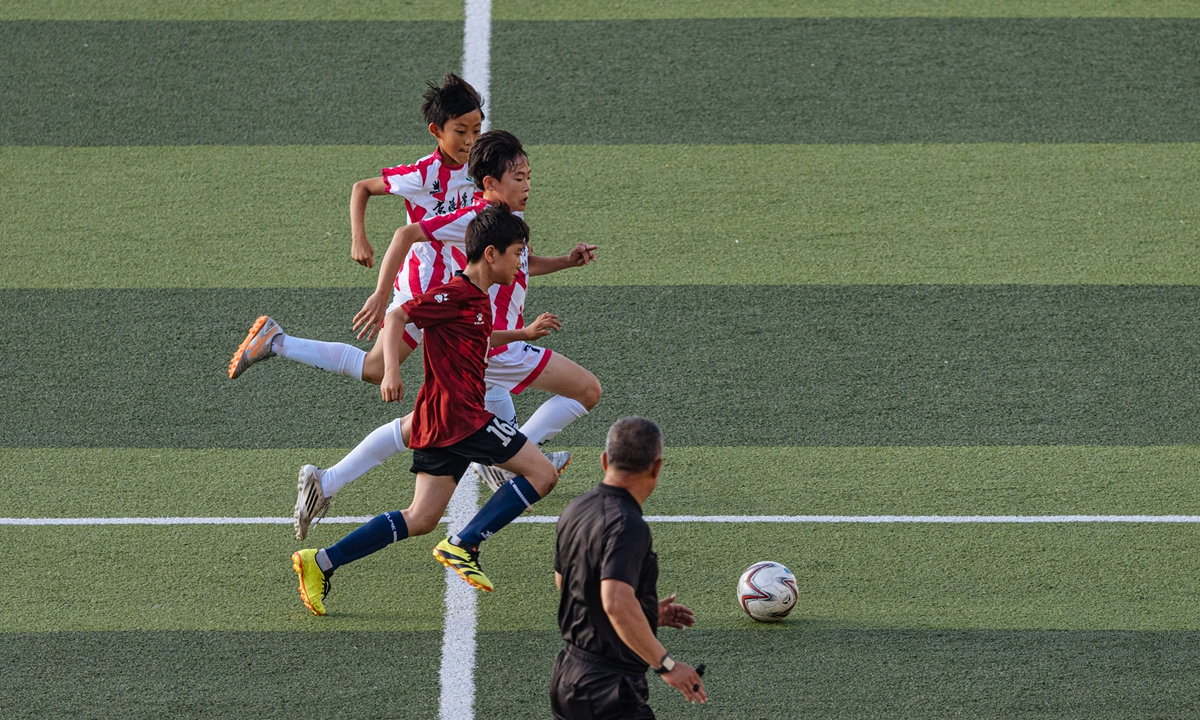
It was a busy school break. The national finals of the 2025-26 youth campus soccer league, rounds of the fifth China Youth Football League, city and provincial campus competitions, private club cups and overseas invitationals filled the calendar. Some children played close to home; others spent part of their summer travelling with teammates from one tournament to another.
The sixth 2034 Cup was among the most visible. Its 39 regional qualifiers drew 882 teams and 12,604 players, with 128 teams reaching the finals in Suzhou, East China's Jiangsu Province. Teams from other countries also took part, adding an international element to a tournament aimed at primary-school players, according to the Xinhua News Agency.
Does this crowded calendar by itself signal a turnaround for Chinese soccer? China's men last reached the World Cup in 2002. But the summer offered a view of a playing base being built from below and raised a harder question: Can the enthusiasm survive the return to school, unequal access to training and the growing costs borne by families?
From the first touch
In China's youth soccer system, coach Zhao Xinxin works at its broadest and most fundamental level - introducing young children to the game.
He coaches an introductory group of about 15 three-year-olds, three interest classes of 15 to 20 children aged five to 10, and four advanced groups of roughly 10 players aged five to 14. He has worked with more than 100 children over the years.
Starting younger is one of the clearest changes Zhao has observed in recent years. Soccer is appearing not only in schools and social clubs but also in some kindergartens. Most parents initially want an after-school activity that gets their kid moving.
Only when a player begins to stand out do questions about more advanced training and a possible route forward arise.
That route now has several layers. A child in a commercial club can move from introductory and interest classes to advanced teams. A school player may be selected for district and city teams, then enter national campus competitions; professional academies, sports schools and social clubs provide other pathways.
China began promoting campus soccer on a national scale in 2015, when six government departments issued guidelines calling for soccer to be incorporated into school education through designated soccer schools, regular competitions, teacher training and improved facilities, according to the Ministry of Education.
The program has continued to expand while shifting its focus from increasing participation to improving the quality of teaching, training and competition. In 2025, another 4,928 schools were recognized as national youth campus soccer schools, according to the ministry.
The result is more soccer on the calendar. Zhao told the Global Times that youth matches take place somewhere in Beijing almost every week, especially during school holidays. His club's advanced teams play weekend fixtures with referees and standings, as well as regional competitions and finals.
Tournaments such as the 2034 Cup give this broad base a visible target. Soccer commentator and youth-project organizer Dong Lu launched the event in 2021 after repeatedly seeing Chinese social media celebrate Japan's high-school soccer tournament. Its name looks toward the 2034 World Cup, when the first group of participants will be about 25.
Earlier this summer, a team selected through Dong's youth soccer project offered another source of encouragement. The Chinese Football Boy U12 team won all seven matches at the Sigismondi International Youth Cup in Italy, becoming the first Asian team to claim the championship.
Yet Dong cautioned against reading too much into a single championship. Strong players, he said, must emerge from a much broader soccer culture. "Players come from the people around us, from the soil and culture in which they grow," he told the Global Times.
Who can keep playing?
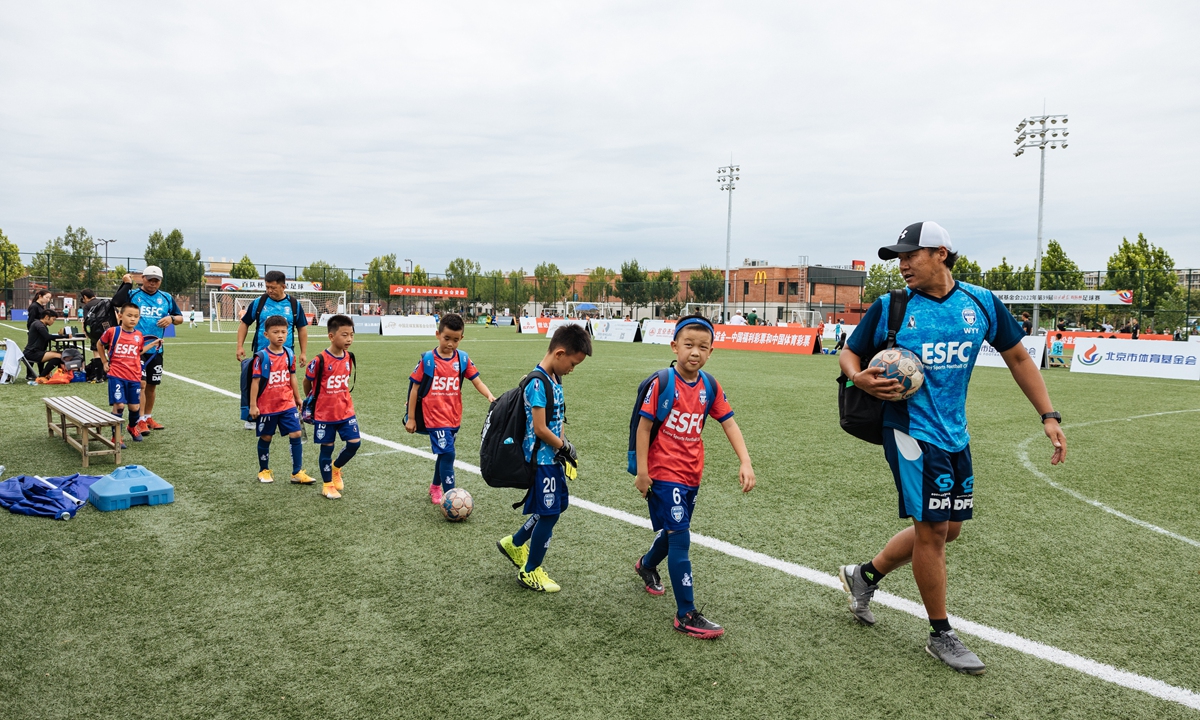
For Zhao, the first major break comes at 12. Children may train throughout primary school, then stop after entering middle school as homework, examinations and family expectations take over - a pattern he calls "retiring at 12."
Campus soccer should be the main way to keep the player pool broad, he said, because school is where nearly every child spends most of the day. More schools now provide soccer classes and in-class competitions, but implementation varies.
Zhao recalled a class tournament in which a child was injured. After a parent complained, the remaining matches were cancelled. Safety concerns are understandable, he said, but cancelling competition altogether removes opportunities from every child.
For families, this is also the stage when soccer stops being a simple extracurricular activity. If a child has shown unusual ability, parents must decide whether to seek stronger teams, change schools, accept more travel and training, or keep soccer only as an interest. The decision depends not only on talent and the child's wishes, but also on educational expectations and how much time and money the household can commit.
The contrast with Europe lies partly in continuity. Zhao cited his nephew in Hungary, who trained at a Barcelona-affiliated academy between the ages of six and eight before being selected by a local club at nine.
Once children join organized training there, he said, they are registered at relatively low cost, and their movement between clubs is recorded in the soccer association's system - closer to transferring schools than simply leaving one commercial course for another.
Dong made a broader comparison. Japan's national team increasingly draws on players who have further developed further in European leagues, while China still relies mainly on its domestic league to prepare future internationals.
In his view, the two systems operate like production lines with different competitive standards. Young Chinese players therefore need more high-level matches, whether foreign teams come to China, Chinese teams travel abroad or selected players enter overseas leagues.
But overseas training cannot substitute for a domestic system, nor is it open to every family. Zhao said it requires ability, physical readiness, money and the capacity to adapt to a different language, diet and daily life. Some parents send a child abroad; others move with them, reorganizing work and family life around soccer without knowing whether the child will ever turn professional.
For now, the most telling test may come not in 2034, but this coming September, when a child enters a new grade and decides whether there is still time in the week for soccer.
。 在望花区塔峪镇,王庆海实地查看散煤堆场治理情况,现场研究解决治理过程中存在的困难和问题,要求相关部门和县区切实扛起生态环境保护政治责任,聚焦中央和省环保督察反馈意见,坚决彻底抓好整改落实,严格按照时间节点全面做好散煤堆场治理工作,全力打造良好优美生态环境。要加大对散煤堆场企业的监管力度,深入企业开展现场帮扶指导,根据企业需求合理规划场地、集中经营管理,推动企业规范、集约、绿色发展,从源头解决无序堆放、违法占地等行为。特别是当前,即将进入供暖季,要加快散煤替代工作进度,强化宣传引导,结合地区实际积极推进清洁能源供暖,为散煤堆放治理提供有力保障。 沿滨路作为城市东西方向主干道,车流密集、往来频繁,是外来人员进出市区的交通要道。王庆海沿路边走边看,就做好城市绿化、净化、序化、亮化等工作提出具体要求。他强调,要深入贯彻习近平总书记关于科学推进城市管理的重要论述,始终坚持以人民为中心,从群众关心关注的热点难点堵点问题入手,持续推进城市环境综合整治,以绣花功夫做好城市精细化管理,不断增强人民群众的获得感、幸福感、安全感。要扎实做好浑河及支流河治理,坚持防洪与景观并重,为全体市民打造更多、更加便捷的休闲健身场地。要合理布局城市绿化工作,科学修剪行道树枝,消除安全隐患、培育美观树形,增强景观层次感、色彩感、观赏性,全面提升城市品质。 副市长王金华、张君昶参加调研。

二 | 责任编辑:李丹。
Current article:http://gxlpezm.shuicengchongmingnouhuawang.bond/news/20260826_483612.html
Published on:19:17:44
我爱我家_Random reading
- 08-25Scientists Explain Why Taxing Mental Work Wears You Out
- 08-21罗托鲁瓦两车相撞,造成4人受伤
- 08-25国家疾控局:做好“五一”假期及春夏季新冠病毒感染等重点传染病疫情防控工作
- 08-21普京定下新规矩:你打我民用设施,我断你粮食出口,谁也别想好过!,千羽解读,原创 普京定下新规矩:你打我民用设施,我断你粮食出口,谁也别想好过!
- 08-22生日当天夺得赛季首冠,兹维列夫28岁生日快乐!
- 08-25受台风影响 上海迪士尼乐园9月15日开放时间将推迟
- 08-26这届年轻人,为何负债旅行?
- 08-202026中国小篮球全国总决赛圆满收官,安踏儿童全程科技护航
- 08-24纺织鞋服“百企千品强链对接”活动首次出省
- 08-26方盒子插混硬派 SUV,广汽传祺越 7 将于 9 月 2 日开启预售

金陵十三钗_Active users
- 打一口井添一炉火升一面旗 锡林郭勒盟用身边故事讲活团结佳话
- 《GTA6》黑客请求玩家捐款:为正义而战 我们风险太大
- Allu Arjun or Pawan Kalyan? Logesh Kanagaraj Keeps Fans Guessing
- 강원도 산업용 전기요금 8% 인하…정부·한전 지역 요금제 공개
- Employer-sponsored health coverage costs jumped this year. More hikes may be coming
- 今天我市有大范围阵雨或雷雨 请及时关注最新气象灾害预警信息
- 爱科赛博:计提减值准备减少公司合并报表利润总额872.94万元
- 中国十大最拥挤的互联网公司:二七百度输给酒仙桥360
- UK ex-pilots helping Chinese military?
- Number_i、米エージェントと契約も「成功は至難の業」待ち受ける“高いハードル”超えたBTS
- China In Photos: China's homegrown C919 aircraft completes 1st int'l commercial flight
- 出産から半年→21歳の露フィギュア女子が公開した“4回転ルッツ完全着氷”に戦慄!「まじなのか…」「なんて美しい!」「4年後は金メダルだ」
- 若快船遭重罚会进仲裁程序 小卡坚信会在9月结束
- 饮食健康知易行难,平安管家陪伴客户养成好习惯,饮食健康知易行难,平安管家陪伴客户养成好习惯
- 智能拳击手套和沙袋可用于每月订阅费用
- 莫雷托:米兰仍未与波尔图就希门尼斯转会达成协议,将进一步接触
- 【收评】纯碱日内下跌1.05%机构称纯碱基本面宽松不改,期价底部震荡
- 茂名彩民喜中双色球一等奖,奖金2941万元
斗破苍穹_Hottest this week
- 08-23Inner Mongolia FTZ launches cattle and sheep trade alliance
- 08-21菲律宾“冲闯黄岩岛”闹剧开场!中国海警:依法在黄岩岛海域常态开展维权执法活动
- 08-26华为鸿蒙平板 HarmonyOS 7.0 花粉 Beta 版新增个人热点功能,支持自动识别网络并共享给其他设备
- 08-25英镑兑美元短线下挫,日内跌超1%
- 08-20贝壳找房旗下德佑门店房源层高虚假宣传,调解只给3000元体验金拒绝退还中介费
- 08-22为什么阿根廷队突然变得人人喊打?
- 08-25开封购彩者中得顶呱刮“十倍幸运”一等奖
- 08-21Scholz Sparks Media ‘Sh*tstorm’ by Evading Reporter’s Question on Ukraine While Smiling
- 终极一班3 copyright
- Some of the content comes from the Internet. If you have any offence, please raise it.